Showing posts with label Rotational Grazing. Show all posts

Jul 19, 2017

Interview: Author Judith Schwartz Examines Water Management

When writer Judith Schwartz learned that soil carbon is a buffer for climate change, her focus as a journalist took a major turn. She was covering the Slow Money National Gathering in 2010 when Gardener’s Supply founder Will Raap stated that over time more CO2 has gone into the atmosphere from the soil than has been released from burning fossil fuels. She says her first reaction was “Why don’t I know this?” Then she thought, “If this is true, can carbon be brought back to the soil?” In the quest that followed, she made the acquaintance of luminaries like Allan Savory, Christine Jones and Gabe Brown and traveled to several continents to see the new soil carbon paradigm in action. Schwartz has the gift of making difficult concepts accessible and appealing to lay readers, and that’s exactly what she does in Cows Save the Planet And Other Improbable Ways of Restoring Soil to Heal the Earth, which Elizabeth Kolbert called “a surprising, informative, and ultimately hopeful book.”
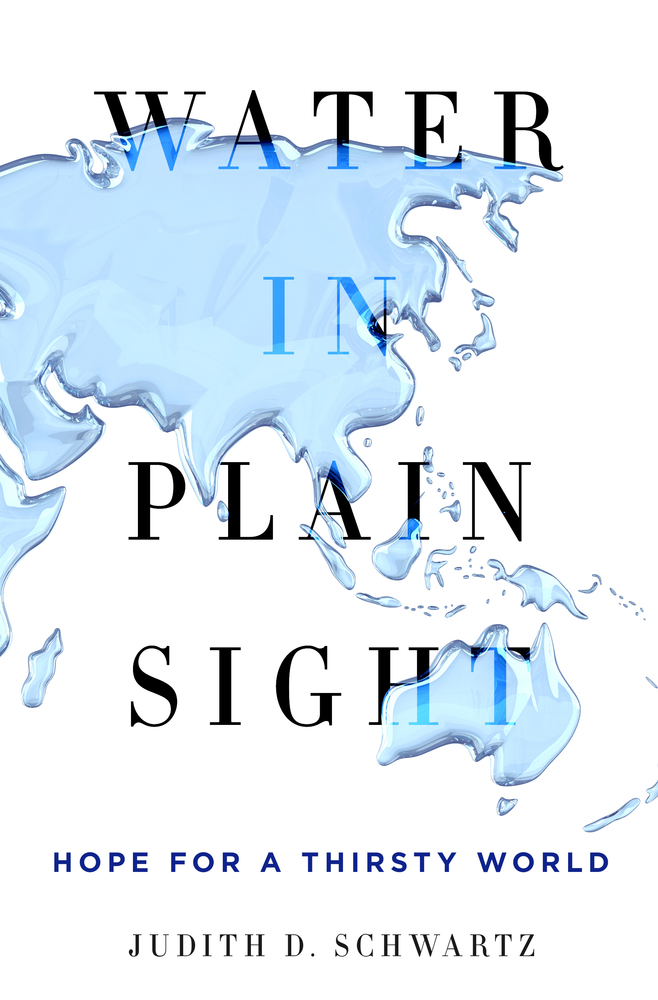
For her most recent project, Water in Plain Sight: Hope for a Thirsty World, Schwartz delves into the little-known role the water cycle plays in planetary health, which she illustrates with vivid, empowering stories from around the world. While we might not be able to change the rate of precipitation, as land managers we can directly affect the speed that water flows off our land and the amount of water that the soil is able to absorb. Trees and other vegetation are more than passive bystanders at the mercy of temperature extremes — they can also be powerful influences in regulating the climate.  
The week after this interview was recorded, Schwartz travelled to Washington, D.C., to take part in a congressional briefing on soil health and climate change organized by Regeneration International. As a public speaker, educator, researcher and networker, she has become deeply engaged in the broad movement to build soil carbon and restore ecosystems.

Read more....

Jun 1, 2017

Healthy soil is the real key to feeding the world

By David R. Montgomery 

Professor of Earth and Space Sciences, University of Washington 

One of the biggest modern myths about agriculture is that organic farming is inherently sustainable. It can be, but it isn’t necessarily. After all, soil erosion from chemical-free tilled fields undermined the Roman Empire and other ancient societies around the world. Other agricultural myths hinder recognizing the potential to restore degraded soils to feed the world using fewer agrochemicals.

When I embarked on a six-month trip to visit farms around the world to research my forthcoming book, “Growing a Revolution: Bringing Our Soil Back to Life,” the innovative farmers I met showed me that regenerative farming practices can restore the world’s agricultural soils. In both the developed and developing worlds, these farmers rapidly rebuilt the fertility of their degraded soil, which then allowed them to maintain high yields using far less fertilizer and fewer pesticides.

Their experiences, and the results that I saw on their farms in North and South Dakota, Ohio, Pennsylvania, Ghana and Costa Rica, offer compelling evidence that the key to sustaining highly productive agriculture lies in rebuilding healthy, fertile soil. This journey also led me to question three pillars of conventional wisdom about today’s industrialized agrochemical agriculture: that it feeds the world, is a more efficient way to produce food and will be necessary to feed the future. 

Read more...>

Aug 9, 2016

Diana Rodgers: Meat is Magnificent: Water, Carbon, Methane & Nutrition

There was a recent article in The Washington Post entitled “Meat is Horrible”, once again vilifying meat, that was full of inaccurate statements about the harm cattle impose on the land, how bad it is for our health, and how it should be taxed. Stories like this are all too common and we’ve absolutely got to change our thinking on what’s causing greenhouse gas emissions and our global health crisis.

Hint: it’s not grass-fed steak

In the few days since the story originally came out, I’ve been brewing up some different angle to write. I’ve written here, and here about the benefits of red meat, and how Tofurky isn’t the answer to healing the environment or our health. I keep saying the same thing over and over. Recently, I posted this as a response to Arnold Schwarzenegger’s new claims that a plant-based diet is optimal. I also wrote about Philadelphia’s sugar tax here, and I don’t think a meat tax is any better of an idea, especially when the government is subsidizing the feed. I’m feeling quite frustrated.

This morning, I went back to see the post and noticed that the story has been “significantly revised to address several inaccurate and incomplete statements about meat production’s contribution to greenhouse gas emissions.” Most of the original points, references and charts are missing. However there are still some important pieces of information that I feel the author missed. The main one being that meat itself isn’t evil, it’s the method by which we farm it (feed lots and CAFOs-Confined Animal Feeding Operations) and how we prepare it (breaded and deep fried), and what we eat alongside it (fries, and a large soda).

Stop hating the player and instead, hate the game. Humans have been eating meat for all of our existence. Why vilify it now? I think what most people are really upset with are modern agricultural techniques and hyper-palatable, ultra-processed foods. Those are the real issue here, not a grass-fed steak. I’ll address some of the points directly:

Read more >>

Apr 22, 2016

Ruminant livestock and greenhouse gases

By Alan Broughton 

Within the climate change action movement there is a stream that places priority on reduction in livestock numbers as the key strategy to reduce greenhouse gases. I believe this is mistaken. The choice to not eat meat or other animal products should be regarded as a personal choice, not an ecological choice. There is no ecological justification for advocating a drastic reduction in livestock numbers as part of climate change mitigation. Efforts would be better spent in focusing on the real issues: energy generation, transport and the sustainability of farming systems. 

Livestock production can become an effective carbon sink with great potential to modify the greenhouse gas effect. The obstacle is not livestock but how the animals are managed. This essay addresses the ability of well managed grasslands to sequester the methane produced by grazing ruminant animals and some of the carbon dioxide in the atmosphere produced by industry. 


Mar 30, 2016

Blather Vox Pop : the biological farmer

Alan Broughton is a biological agriculture researcher and organic farming teacher based in Eastern Victoria. He has had extensive experience in farm management and setup both here  in Australia and  overseas.
Dave Riley  discusses with him some  of the assumptions being made about livestock as climate change drivers  and how a new approach to grazing animals can impact on the sustainable ecology of agriculture.