Showing posts with label Sustainable Agriculture. Show all posts

Jul 17, 2019

Ecological agriculture needs to be made a priority

The number of farmers moving to ecological agriculture in its various forms — agroecology, organic, biological, biodynamic, regenerative — continues to grow as farmers and consumers become more aware of the harm pesticides and synthetic fertilisers cause to health and the environment.
Alan Broughton takes a look at this phenomenon and asks why the majority of farmers are still holding on to chemical methods and what can be done to increase the ecological uptake.

Read more...>

Alan Broughton -- biological farmer: Grazing, soil carbon and methane

Alan Broughton is a biological agriculture researcher and organic farming teacher based in Eastern Victoria. He has had extensive experience in farm management and setup both here in Australia and overseas. I had a chance to discuss with him some of the assumptions being made about livestock as climate change drivers and how a new approach to grazing animals can impact on the sustainable ecology of agriculture.

[This interview was recorded in March, 2016]

(Duration:29.01 — 31.1MB)  mp3.

For more information visit The Soil Alliance
Further Reading

Jul 19, 2017

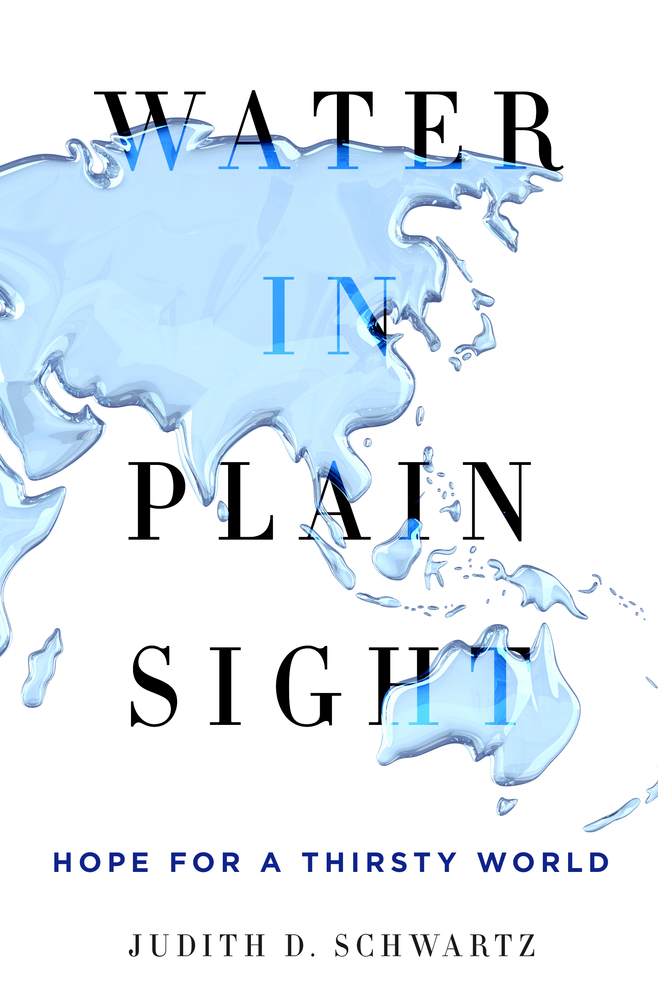
Interview: Author Judith Schwartz Examines Water Management

When writer Judith Schwartz learned that soil carbon is a buffer for climate change, her focus as a journalist took a major turn. She was covering the Slow Money National Gathering in 2010 when Gardener’s Supply founder Will Raap stated that over time more CO2 has gone into the atmosphere from the soil than has been released from burning fossil fuels. She says her first reaction was “Why don’t I know this?” Then she thought, “If this is true, can carbon be brought back to the soil?” In the quest that followed, she made the acquaintance of luminaries like Allan Savory, Christine Jones and Gabe Brown and traveled to several continents to see the new soil carbon paradigm in action. Schwartz has the gift of making difficult concepts accessible and appealing to lay readers, and that’s exactly what she does in Cows Save the Planet And Other Improbable Ways of Restoring Soil to Heal the Earth, which Elizabeth Kolbert called “a surprising, informative, and ultimately hopeful book.”
For her most recent project, Water in Plain Sight: Hope for a Thirsty World, Schwartz delves into the little-known role the water cycle plays in planetary health, which she illustrates with vivid, empowering stories from around the world. While we might not be able to change the rate of precipitation, as land managers we can directly affect the speed that water flows off our land and the amount of water that the soil is able to absorb. Trees and other vegetation are more than passive bystanders at the mercy of temperature extremes — they can also be powerful influences in regulating the climate.  
The week after this interview was recorded, Schwartz travelled to Washington, D.C., to take part in a congressional briefing on soil health and climate change organized by Regeneration International. As a public speaker, educator, researcher and networker, she has become deeply engaged in the broad movement to build soil carbon and restore ecosystems.

Read more....

Jun 1, 2017

New book looks at how corporate power is destroying agriculture — and how it can be changed

By Lalitha Chelliah  
Sustainable Agriculture vs Corporate Greed: Small farmers, food security &
big business
By Alan Broughton & Elena Garcia
Resistance Books
104pp, pb
$15.00
This new book is vital to understand the desperate state of farming in Australia and the world. The foolish thinking behind the way world leaders propose to manage sustainable food production is clearly exposed.
In Sustainable Agriculture vs Corporate Greed, published by Resistance Books, farmers and socialist activists Alan Broughton and Elena Garcia explore the world of survival.
Broughton has enormous experience and knowledge about sustainable farming. He has worked in or studied experiences in Venezuela, Thailand, Tanzania, Uganda, Cuba, South Korea and Italy. He also designed and taught the first organic farming diploma course in Australia.

Feb 15, 2017

Sustainable Agriculture versus Corporate Greed

Due out soon:

From the Introduction:
There is money to be made in farming, but not by the farmers. This pamphlet examines the reasons why farmers around the world are poor and there are a billion hungry people. The terms of trade for farmers continually declines and farmers are forced off the land. Governments and international bodies advocate further deregulation and trade liberalisation and greater use of technology, yet these policies have undoubtedly failed in their stated aims of increasing food security and rural prosperity. The beneficiaries have only been the agribusiness corporations which have been instrumental in the design of the new order of agricultural production.

...But farmers around the world are resisting...


Dec 7, 2016

AGROECOLOGICAL REVOLUTION The Farmer-to-Farmer Movement of the ANAP in Cuba

This  book  documents  the  experiences  encountered  during  the implementation   of   agroecology   and   sustainable   agriculture
in  rural  economies  and  cooperatives  in  Cuba.  It  is  offered  for reflection and learning.
I believe that our achievements speak for themselves. However, we are  aware  that  we  have  only  just  begun  the  journey towards  making Cuban agriculture more sustainable, ensuring the food security of the people,  and  reaffirming  our  sovereignty  over  the  most  essential  of human needs: food.
When  we  began  to  work  with  noble  intentions,  we  knew  only  that our  needs  were  many,  and  that  the  obstacles  were  countless.    During the  difficult  years  of  the  1990’s,  we  were  looking  for  alternative solutions, through the turmoil, economic, political, and environmental threats, which became even more brutal under the tightening of the US embargo, which is now approaching 50 bitter years of existence. These circumstances imposed  on  Cuban  peasants,  as  on  all  of  the  Cuban people, a difficult trial: to tolerate the embargo in order to preserve the \achievements of the Cuban Revolution.


Read more >>

Aug 11, 2016

Venezuela: Slave labour or just growing more food?

Venezuelans taking part in a voluntary program to boost a slowly developing agricultural sector, described by the US media as "slavery".The United States media's latest offensive against Venezuela's socialist President Nicolas Maduro targets a new sustainability program that transplants urban workers to farmland. Some quarters of the mainstream media have equated it with slave labour.Passed on July 22, the decree sets up a voluntary program for public and private workers to cultivate organic food for 60 days on their normal salary before returning to their jobs.
Venezuela is suffering from a food shortage, largely caused by businesses hoarding food while stashing away government money reserved for imports. The Venezuelan economy largely relies on oil, the price of which has dropped dramatically, but Maduro has passed several measures to develop agricultural production.Head of the Bolivarian Socialist Workers' Centre Carlos Lopez, said the new program was planned alongside community organisers.
“The workers that want to move to reactive [agricultural] businesses can move and will have their rights guaranteed,” Lopez told Union Radio.Soundbites circulating in the US media are exclusively from Amnesty International, whose closest office is based in Mexico City. Amnesty's Americas division released a statement calling the program “unlawful” and saying it "effectively amounts to forced labour”. It added that Venezuela should seek humanitarian aid for a “workable long term plan” rather than develop its own agricultural sector.

Read more >>

GALLERY: City Farming in Venezuela's Rooftop Gardens
Can Sustainable Agriculture Solve Food Problems in Venezuela?

Aug 10, 2016

Monsanto Losing Millions as Farmers in India Plant Indigenous Seed

 By Christina Sarichand  of  UndergroundReporter.org. 

(UR) India — Monsanto is losing millions on failed GM cotton. The company illegally pushed a form of Bt cotton into India and Africa more than a decade ago, but farmers are now pushing back by planting their own indigenous seed.
Monsanto is accused of writing laws and then breaking them to enter the market in India, but after more than 300,000 farmer deaths between 1995 and 2013, many of them attributed to Monsanto, the company is finally paying for their misdeeds. The corporation’s greed is linked to farmer suicides throughout Maharashtra, considered the ‘Cotton Belt’ in India.
The Indian government is now actively promoting the use of indigenous seed, and has called Monsanto out for profiteering illegally on Bt cotton seed.

Aug 9, 2016

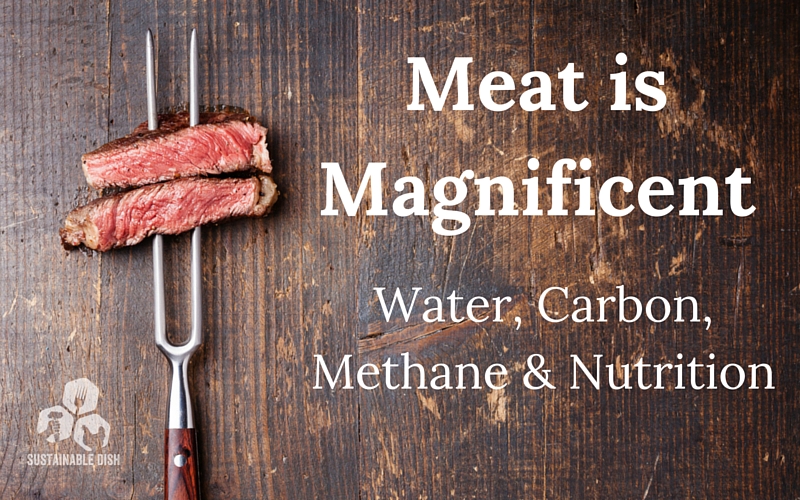
Diana Rodgers: Meat is Magnificent: Water, Carbon, Methane & Nutrition

There was a recent article in The Washington Post entitled “Meat is Horrible”, once again vilifying meat, that was full of inaccurate statements about the harm cattle impose on the land, how bad it is for our health, and how it should be taxed. Stories like this are all too common and we’ve absolutely got to change our thinking on what’s causing greenhouse gas emissions and our global health crisis.

Hint: it’s not grass-fed steak

In the few days since the story originally came out, I’ve been brewing up some different angle to write. I’ve written here, and here about the benefits of red meat, and how Tofurky isn’t the answer to healing the environment or our health. I keep saying the same thing over and over. Recently, I posted this as a response to Arnold Schwarzenegger’s new claims that a plant-based diet is optimal. I also wrote about Philadelphia’s sugar tax here, and I don’t think a meat tax is any better of an idea, especially when the government is subsidizing the feed. I’m feeling quite frustrated.

This morning, I went back to see the post and noticed that the story has been “significantly revised to address several inaccurate and incomplete statements about meat production’s contribution to greenhouse gas emissions.” Most of the original points, references and charts are missing. However there are still some important pieces of information that I feel the author missed. The main one being that meat itself isn’t evil, it’s the method by which we farm it (feed lots and CAFOs-Confined Animal Feeding Operations) and how we prepare it (breaded and deep fried), and what we eat alongside it (fries, and a large soda).

Stop hating the player and instead, hate the game. Humans have been eating meat for all of our existence. Why vilify it now? I think what most people are really upset with are modern agricultural techniques and hyper-palatable, ultra-processed foods. Those are the real issue here, not a grass-fed steak. I’ll address some of the points directly:

Read more >>

Jul 16, 2016

Fix farming by junking the corporate model

By Elena Garcia

Australian farming is in crisis.

Family farmers are being taken over by corporate agribusinesses, their land is being polluted by mining companies and they are powerless to stop and the supermarket duopoly of Coles and Woolworths which keeps prices low for consumers by paying producers prices so low they barely cover costs.

At the same time there is increasing speculation in buying water rights. Farming cannot survive without clean water. The most reliable source of water is artesian, which the mining industry can draw from unregulated and pollute at will.

Meanwhile banks are foreclosing on drought-struck farmers so they can sell the still viable farms to corporations, both domestic and foreign.

Farmers cannot win this battle against the corporations without allies. Australia is one of the most urbanised countries on Earth. Almost 90% of Australians live in urban areas. We have some of the cleanest, most regulated food production in the world. If you want to protect that quality, it is time to support and protect our farmers.

Rural Workers: AUDIO

Elena Garcia is a socialist and organic beef farmer from Queensland. In this talk she addresses the brutal regime that farmers have to survive in order to farm and make a living.
She delivered the talk at the Socialism for the 21st Century Conference  held in Sydney during may 2016.
(Duration:21.40 )


Jul 15, 2016

Organic Farmers Are Not Anti-Science, but Genetic Engineers Often Are

By Elizabeth Henderson, Independent Science News | News Analysis
Scientific evidence shows that the widespread adoption of genetically engineered crops in the US has led to an increase in pesticides used in agriculture -- and an increase in the residues of pesticides left in foods, among other disturbing trends.

At one of the public brainstorming sessions for the New York Organic Action Plan, an organic farmer made an impassioned plea for support for "independent science" and told us that with 8.5 billion mouths to feed by 2050, we will need genetic engineering to prevent starvation.

I would like to examine these words carefully to decipher what they mean, how those words are used by this farmer and by others, and suggest how the movement for locally grown organic food in this country should respond.

What is the meaning of 'independent science'? As co-chair of the Policy Committee for the Northeast Organic Farming Association of New York (NOFA-NY), I have been an active participant in the coalition that is campaigning to pass GMO labeling legislation in NY State. In this capacity, I have spoken at public meetings, to the press and on radio interviews. A question that I have heard from proponents of biotechnology is "why do you organic farmers oppose science, like the climate deniers?"

Hunger in Venezuela? A look beyond the spin

By Christina Schiavoni and William Camacaro

You  may have seen the headlines about Venezuela – headlines that allude to food scarcity, rioting, people eating stray animals to survive, and a country on the brink of starvation. These stories are not only alarming, but perplexing, too. Is this the same country that was recognized by the UN Food and Agriculture Organization (FAO) as recently as 2015 for having nearly eradicated hunger?[1] Is this the same country that has been the focus of international delegations and extensive alternative media coverage for its ‘food sovereignty experiment’ involving agrarian reform, food distributions programs, and direct citizen participation in the food system?[2] What’s going on?


There is a nuanced story behind the current headlines on Venezuela. It’s a challenging moment for average working class Venezuelans as they navigate long lines at the grocery store, a lack of key food staples, and inflated prices in order to feed their families.

But there’s not an overall food shortage — food is in abundance, with distribution serving a bottleneck.

Read more >>

Jan 23, 2016

Sustainable Australian agriculture under corporate attack from mining, banks and agribusinesses

A new wave of land grabbing is turning farmland into industrial monocultures.
In the past few years, private investors backed by corporate interests such as global banks, financial firms, hedge funds and food giants have bought a huge amount of farmland across the global South.
Oxfam's 2012 Our Land, Our Lives report on land grabbing said foreign investors had bought enough land in the past decade to feed 1 billion people. Oxfam singled out the World Bank, which has boosted its finance of intensive, large-scale agriculture in the global South from $2.5 billion a year in 2008 to $9.5 billion in November 2012.
The World Bank refused Oxfam's call to put a freeze on its loans to land grabbers, saying its investments were not adding to the food crisis, but providing “major new investment in agriculture to improve the productivity of large and small farmers while protecting the environment”.
However these investments are being used by corporations to buy up prime food-producing land, just as free trade treaties come into play that will allow them to sue governments that affect their profits by attempting to regulate their use of that land.
As at least two-thirds of the land grabbers intend to “export everything they produce”, Oxfam said these business plans “will come into direct conflict with the need for more land to feed a growing global population”. Most firms that take the World Bank's money use the land to produce biofuels to feed cars, or commodities to sell on overseas markets.
Researchers Shepard Daniel and Anuradha Mittall said in a 2009 study: “Not only does land grabbing mean that farmers will lose their land, but these lands will be transformed from smallholdings or communal lands into large industrial estates connected to far-off markets.”
The new wave of land grabbing is also turning the farmland into industrial monocultures, which rely heavily on chemical inputs and produce huge greenhouse gas emissions.