Jul 17, 2019

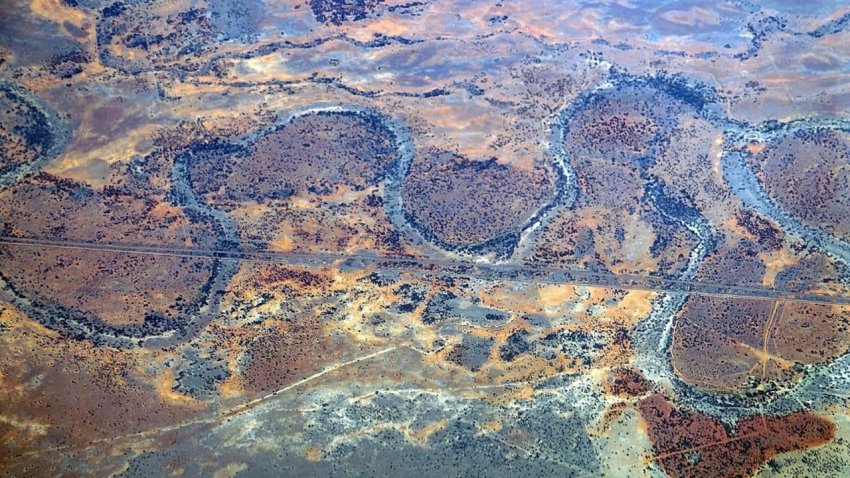
Corruption is killing our rivers

The ABC 4 Corners program “Pumped”, which screened on July 24, 2017, showed that far from saving the river system, the implementation of the Murray-Darling Basin Plan has created a financial windfall for a select few.
Political corruption and fraud have been a part of the process from the beginning, ensuring that big irrigators, who are also National Party donors, have been the major beneficiaries of the extra environmental water being returned to the river. Water speculation has been encouraged. Environmental water purchases have ended up as simply a way to privatise water for the financial gain of a handful of big corporate irrigators.

Rivers in crisis: Redesigning river systems for profits

As prolonged drought bites deeply in New South Wales and Queensland, and regional towns run out of water, state and federal governments are continuing their push to deliberately dry out the Menindee Lakes.
The Menindee Lakes, located in far west NSW near the town of Menindee, are a chain of big shallow lakes along the Darling River that form an important water storage system.
Although politicians claim there is too much evaporation from the lakes and associated wetlands, ecologists state that they are a key part of maintaining water flows and preventing mass fish kills in the river systems. They have also pointed out that the lakes are crucial migratory waterbird habitats and key fish breeding areas.

Rivers in crisis: The deliberate murder of the Menindee Lakes

After five years and $13 billion of public money spent on the Murray-Darling Basin Plan, there is less water in the river than ever before — and more in the private water storages of a handful of National Party donors.
While everyone in charge is saying only more water will fix the problem, none of them are talking about pumping water back out of these storages, even though billions of litres have been illegally drained out of the rivers.
Instead state and federal governments are pushing on with their Menindee Lakes Water Saving Project that seeks to “decommission” the lakes by drying them out. The effects of this policy will be devastating for the Lower Darling.
These lakes are a key wetland in the Murray-Darling Basin freshwater ecosystem and an important fish breeding and waterbird habitat, with more than 30 species of waterbirds, including threatened species such as freckled ducks and migratory waders, inhabiting the area.

Read more...>

Ecological agriculture needs to be made a priority

The number of farmers moving to ecological agriculture in its various forms — agroecology, organic, biological, biodynamic, regenerative — continues to grow as farmers and consumers become more aware of the harm pesticides and synthetic fertilisers cause to health and the environment.
Alan Broughton takes a look at this phenomenon and asks why the majority of farmers are still holding on to chemical methods and what can be done to increase the ecological uptake.

Read more...>

Alan Broughton -- biological farmer: Grazing, soil carbon and methane

Alan Broughton is a biological agriculture researcher and organic farming teacher based in Eastern Victoria. He has had extensive experience in farm management and setup both here in Australia and overseas. I had a chance to discuss with him some of the assumptions being made about livestock as climate change drivers and how a new approach to grazing animals can impact on the sustainable ecology of agriculture.

[This interview was recorded in March, 2016]

(Duration:29.01 — 31.1MB)  mp3.

For more information visit The Soil Alliance
Further Reading

Feb 2, 2019

Rivers in Crisis:Water theft and corruption in the Darling River system

by Elena Garcia 

 
After a blue green algal bloom deprived the water of oxygen and left a million dead fish along a 40km section of the Darling River at Menindee Lakes, and as the massive NSW drought leaves rural communities like Walgett, wildlife, graziers and stock running out of water, politicians and bureaucracies are holding endless inquiries to appear to be dealing with the crisis. However they have been very slow to implement recommendations, and there are few moves to get more water into the river system or to deal with the mismanagement that is letting the river dry out.

Meanwhile Federal Drought Envoy Barnaby Joyce is rubbishing claims that corruption within the Murray Darling Basin Authority is to blame. “It’s not corruption. That’s a load of garbage,” he told 2GB’s Steve Price on January 11. “What we have is a massive drought. This is one of the worst on record.”

Joyce denied claims from locals that big irrigators up north are being given unfair access to water, leaving none for those down river. Instead he blamed a combination of two factors- that cool weather killed the algal bloom in the drought-reduced water, taking oxygen out of the water and killing the fish. And “bad management” which he said released water from Menindee Lakes for Adelaide use, to flow out the barrages.
 

May 25, 2018

How did Murray Goulburn, once Australia’s biggest milk processor and a successful dairy cooperative since 1950, end up sold to its international competitor, Canadian dairy giant Saputo? In this  multi-part series, Elena Garcia provides some answers.


After nearly 70 years as a cooperative that was wholly owned by the farmers who supply the milk, on April 5 Victorian dairy farmers voted to sell Murray Goulburn, once Australia’s biggest dairy processing business, to foreign owners.
The $1.31 billion deal, unanimously supported by the Murray Goulburn board, includes the cooperative’s operating assets and liabilities, including the 10-year contract to supply Coles with $1 a litre milk. Saputo officially took over Murray Goulburn on May 1.
After a campaign, begun by Murray Goulburn directors at the annual general meeting on October 27, to present the sale as the only way to protect the cooperative from the banks, nearly 96% of farmer shareholders voted in favour of the takeover deal by Canadian dairy giant Saputo.

Apr 4, 2018

No pesticide residue levels are safe

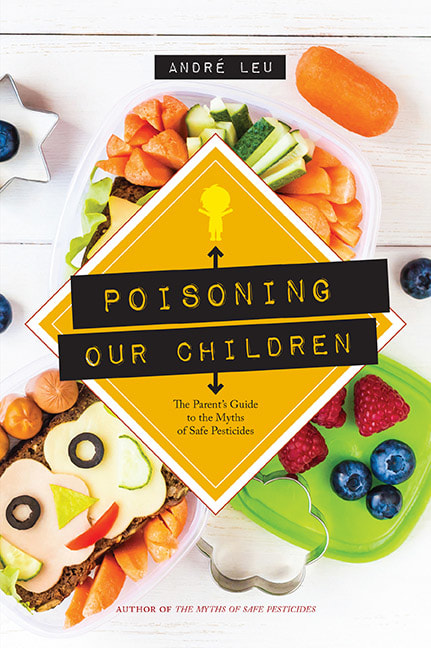
Poisoning Our Children: The Parent’s  Guide to the Myths of Safe Pesticides,
By André Leu, 2018,  
Published by Acres USA, 205pp.


Reviewed by Alan Broughton.

André Leu is an organic tropical fruit grower  at Daintree in North Queensland. He  is the former president of the International Federation of Organic Agriculture Movements(IFOAM), the peak world organic farming body.

This book shows there is plenty of peer-reviewed science finding monumental faults with pesticide use and regulation, science that regulators do not use in their deliberations. André Leu uses this science to show that pesticide safety is based on data-free myths.

There are five myths: that pesticides are  rigorously tested, that residues in food are so small they are harmless, that pesticides quickly biodegrade, that regulations are reliable, and that pesticides are essential for agriculture.

A total of 232 chemicals have been found in placental cord blood of newborn babies  in the   United States. Many of these are endocrine disruptors, affecting the developing brain and hormones of children. No safety tests are done on the young – all are performed on adolescent or adult animals (usually rats). Even minute amounts are dangerous for foetuses and babies. Some pesticides, for example glyphosate, the most widely used herbicide in theworld, have a greater effect on hormones in parts per billion than in parts per million. This is because the body can recognise higher amounts and reject them.

Feb 28, 2018

Vandana Shiva and the struggle to take back control of seeds

By Alan Broughton

Crop varieties have been selected and reproduced over thousands of years by farmers, creating great

After the end of World War II, with the sudden availability of nitrate fertilisers – used in munitions – and pesticides developed for protecting soldiers from lice and mosquitoes, corporations saw great opportunities in agriculture. New crop varieties were developed that responded well to nitrate fertilisers and were more susceptible to pests and diseases.

These new varieties were often hybrids that either failed to germinate in the next generation or reverted to one of their parents, meaning they have to be purchased each year. Some, however, do reproduce well, so plant breeders rights legislation, under various names, was introduced to legally prevent seed saving of those patented varieties.

Genetic modification is a further strategy to ensure continual re-purchase of seeds.

Consequently, huge numbers of crop varieties have been lost as control over genetic resources is transferred from farmers to corporations.

As alarm over this was raised around the world, seed saving networks sprang up to protect the remaining traditional varieties.

Read more...

Feb 26, 2018

Heavy metal contamination of food: Where does it come from?

By Alan Broughton
Arsenic levels in rice periodically hit the news. Arsenic is one of several toxic heavy metals found in foods – cadmium, lead, mercury and chromium are others. While these are naturally occurring elements in soil and rock, natural sources are not the main cause of contamination of agricultural produce. Principal sources include fertilisers, pesticides, mining, industrial waste and air pollution. This article focuses on the two most prevalent heavy metal contaminants – cadmium and arsenic.

Origins

There are two major sources of heavy metal contaminants in fertilisers. One is naturally occurring cadmium in rock phosphate, which is mined and processed to produce superphosphate and other soluble phosphatic fertilisers, or used directly. The other arises from the practice of adding industrial waste to fertilisers as a means of disposal, material containing mercury, arsenic, nickel, copper, zinc, uranium, lead, chromium and cadmium.
In the US any material that has some qualities as a fertiliser can be used on fields in the name of recycling, even low level radioactive waste from uranium processing. The California Public Interest Research Group identified 22 toxic elements in chemical fertilisers in 1996, all of which contained industrial waste from steel works, cement factories, paper making and electronic plants. The practice of adding industrial waste to fertilisers was revealed by Duff Wilson in Fateful Harvest (Wilson 2001). Until at least 2002 this practice was totally unregulated. Indeed, the US EPA stated (1997): “EPA’s longstanding policy encourages the beneficial reuse and recycling of industrial waste, including hazardous wastes, when such wastes can be used as safe and effective substitutes for virgin raw materials” (Asokakumar 2017). Few states in the US have any regulations for heavy metal content of fertilisers, only California, Washington and Oregon; nationally there are recommended maximum levels but they are not mandated (McLaughlin 2004).